- An ai receptionist for wedding venues answers tour requests, pricing questions, and availability checks around the clock instead of routing them to voicemail.
- Harmony.ai runs on its own model built for the phone, sub-200ms response, live in days, not months.
- Venue groups lose the most inquiries in evening and weekend windows - exactly when front-desk staffing is lowest.
- A comparison table below ranks in-house staff, human answering services, chat widgets, and voice AI on where each one actually holds up.
- Buy: for multi-location venue groups fielding high call volume outside business hours, voice AI is the better fit than adding headcount.
AI receptionist for wedding venues is a voice AI system that answers every tour request, pricing question, and after-hours call a venue group receives, with the goal of turning inquiry volume into booked tours instead of voicemail. Multi-location venue operators face a call pattern that looks nothing like a single restaurant or clinic: couples shop three to five venues in a matter of weeks, call in evening and weekend windows when front-desk staff is thinnest, and expect a same-day answer on availability before they move to the next name on their list.
Why this matters for wedding venue groups
A wedding is a five-figure booking decided over a handful of phone calls, not a low-ticket transaction a caller will retry twice. If the call goes to voicemail, the couple calls the next venue on their shortlist - they rarely call back.
The same call-volume math shows up in adjacent wedding and event planning businesses, but venues carry an added burden: the venue is the inventory. A missed call isn’t just a lost lead, it’s an empty Saturday that never gets rebooked once the date passes.
For a portfolio operator running multiple properties, the problem compounds. Each location has its own calendar, its own pricing tiers, its own vendor list, and its own front-desk hours - but couples calling in from a Google search or a wedding-directory listing don’t know or care which location picked up. They want an answer now, on the call, in 2026’s expectation of instant response.
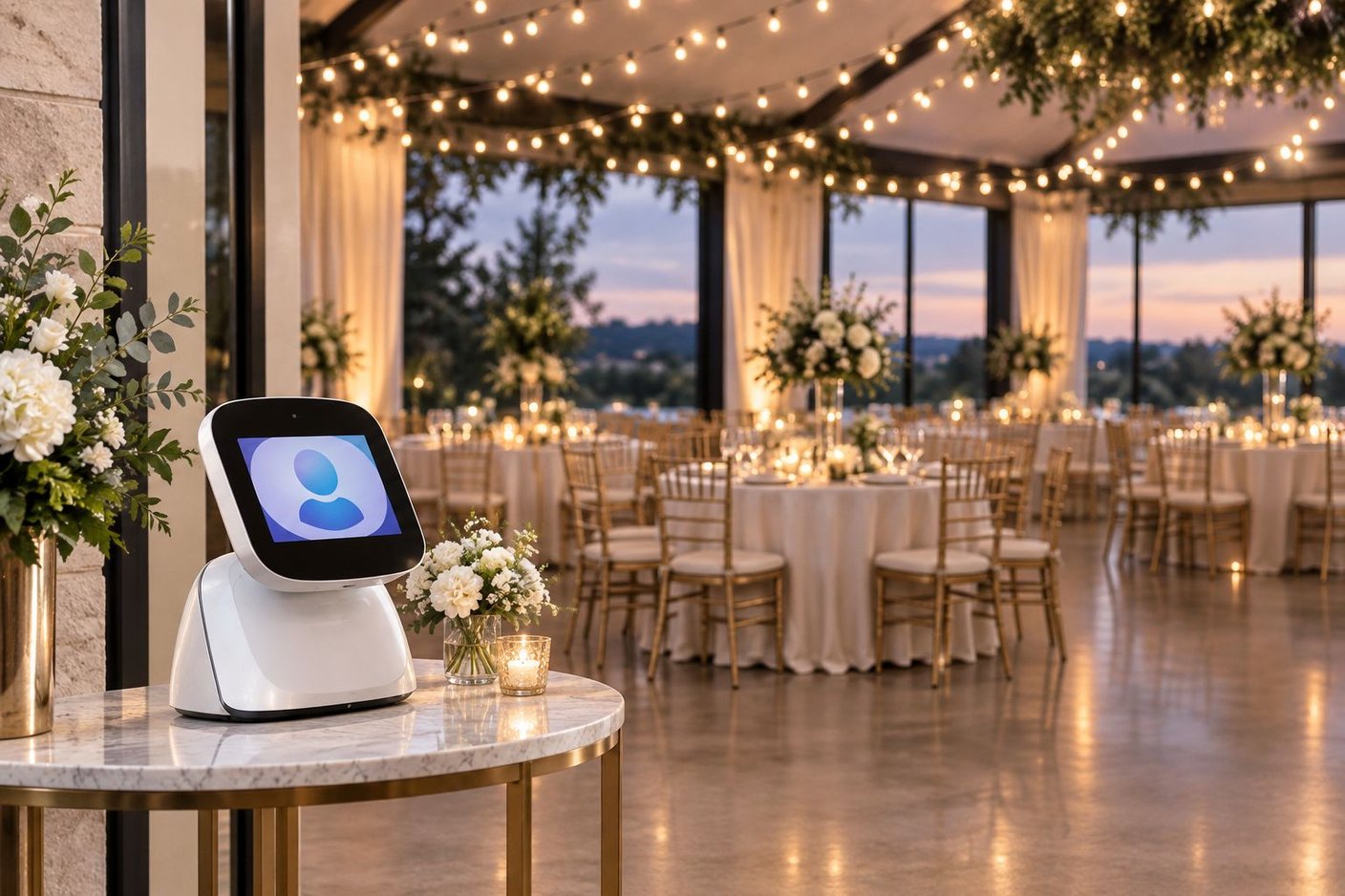
Evening and weekend hours generate the highest inquiry volume and the lowest front-desk coverage.
How to build call coverage for a wedding venue group
Audit your current missed-call rate
Before automating anything, find out how many inquiries are actually reaching a person. Most venue groups have never pulled this number.
Pull call logs from your phone system for the last 90 days
Flag calls under 15 seconds as likely voicemail drops or hang-ups
Cross-reference against your CRM to see how many logged leads have no matching inbound call
Segment by location if you run more than one property
Segment by day-of-week and hour to find your worst coverage windows
Map every call type your venues actually receive
Not every call needs the same handling. A tour request and a vendor delivery confirmation are not the same conversation.
Tour and site-visit requests
Pricing and package questions
Date availability checks
Existing-client logistics (final headcount, load-in times, vendor coordination)
Vendor and photographer calls unrelated to bookings
After-hours emergencies (weather holds, day-of changes)
Write a qualification script before you automate anything
A manual script is free and it’s the foundation any automated system will run on. Skipping this step is the single biggest reason automated call handling underperforms.
Capture event date, guest count, and budget range on the first call
Ask about ceremony vs. reception vs. both
Confirm which location(s) the caller is considering, if you run more than one
Note referral source for marketing attribution
Flag same-week and same-month dates as high urgency
Automate tour bookings and calendar holds
This is where most venue groups plateau on manual process - someone has to check a shared calendar, hold the slot, and confirm by text or email, every single time. Automated tour scheduling closes that gap without a person in the loop. Reminder discipline matters just as much as the initial booking; venues that follow structured reminder sequencing, the kind covered in this breakdown of appointment reminder systems, see fewer no-show tours.
Sync tour slots to a live calendar per location
Confirm the hold immediately on the call, not after a callback
Send a same-day reminder ahead of the tour
Offer a same-call reschedule path instead of a dead end
Route tour data straight into your CRM record
Harmony.ai enters here as the faster path: it runs on its own model built for the phone - deterministic, approved flows at sub-200ms - so it can qualify the caller, check the calendar, and book the tour hold on the same call, then hot-transfer to a sales coordinator when the caller has a same-month date or a high guest count.
Route after-hours and weekend calls without losing them
Evening and weekend hours generate the heaviest inquiry volume and the thinnest staffing. That mismatch is the single largest source of lost bookings for venue groups in 2026.
Define which call types can be fully resolved without a human (availability, pricing, tour booking)
Define which calls need a live hot-transfer regardless of the hour (day-of emergencies, existing-client issues)
Set explicit hours for each location if pricing or availability differs
Confirm every after-hours booking gets logged the same way a daytime one would
Follow up on stalled leads the same day
A tour booked isn’t a wedding booked. Leads that go quiet after a tour need a same-day follow-up call, not a templated email three days later.
Call within hours of a completed tour while the venue is still top of mind
Ask directly whether pricing or availability is the blocker
Offer the next available date if the couple’s first choice is gone
Log every follow-up outcome back to the CRM record
Give staff a clear hot-transfer path
Automation should never replace judgment calls a coordinator needs to make. High-value or emotionally sensitive calls need a live handoff, every time.
Same-month or same-quarter dates route to a live coordinator immediately
Any complaint or dispute transfers live, no exceptions
Vendor and logistics calls for confirmed clients go straight to the assigned coordinator
Build a fallback script for when no coordinator is available
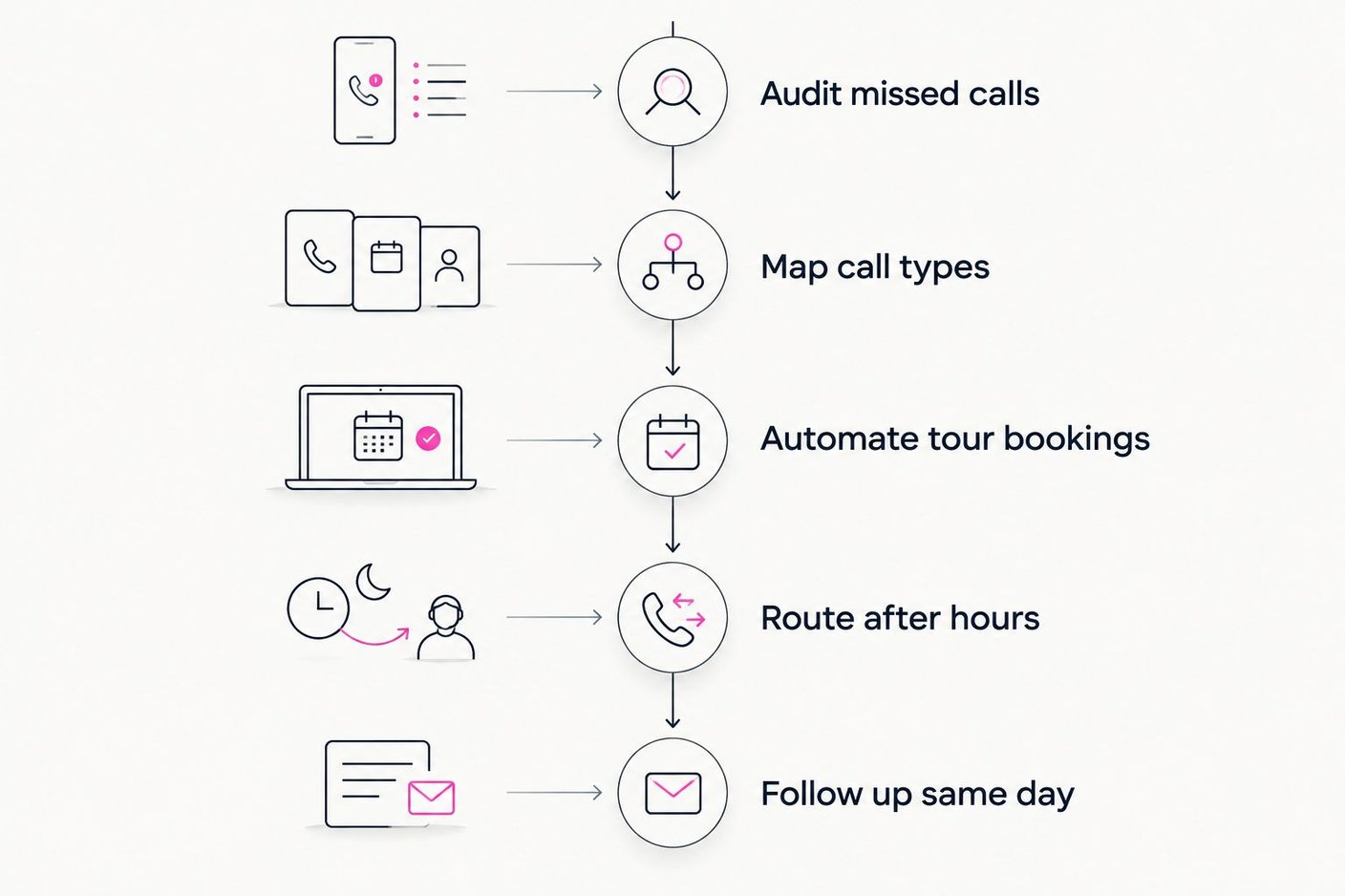
The steps run in order - automation only works once the call types and script are defined.
Comparing your options for venue call coverage
In-house front desk staff
Best for: Single-location venues with predictable daytime tour hours
Key limitation: Cannot cover evenings, weekends, or simultaneous multi-location call volume
Human answering service
Best for: Venues needing a live voice for overflow without hiring
Key limitation: Scripts stay generic; agents rarely know per-location pricing or calendar detail
DIY chat widget or form
Best for: Venues wanting a low-effort web capture tool
Key limitation: Doesn’t answer the phone at all - misses the caller who wants to talk now
Harmony.ai voice AI receptionist
Best for: Multi-location venue groups with high after-hours and weekend inquiry volume
Key limitation: Needs an approved script and calendar integration set up before launch
The difference between an answering service and a voice AI system isn’t just cost - it’s whether the person (or system) on the call can actually check your calendar and quote your package tiers. That distinction is covered in more depth in this enterprise comparison of AI receptionists versus answering services.
Verdict: for a venue group fielding tour requests across more than one property, Harmony.ai’s voice AI receptionist is the option built for the call volume and after-hours pattern venues actually see in 2026 - an in-house front desk or answering service can’t match the coverage without adding headcount.
See it on a live call
Walk through how a voice AI agent handles a real tour request end to end.
Common mistakes wedding venue groups make
Letting evening and weekend calls default to voicemail. This is the exact window couples call in, and voicemail is where bookings go to die.
Quoting inconsistent pricing across staff and locations. Couples comparison-shop and catch it fast; inconsistency reads as disorganization.
Never following up after a tour no-show. A missed tour still represents an interested couple until someone calls to reschedule.
Treating every location’s calendar as a separate system with no shared visibility. Staff waste time cross-checking calendars a caller expects answered instantly.
Skipping lead-source and qualification capture on the call. Without it, marketing can’t tell which channel is actually producing booked weddings.
FAQ
What does an AI receptionist for wedding venues actually do?
It answers inbound calls for tour requests, pricing, and availability, books calendar holds, and hot-transfers same-month or high-value inquiries to a live coordinator. It runs the full call end to end instead of just taking a message.
Is an AI receptionist better than a human answering service for venues?
For multi-location venue groups with heavy evening and weekend call volume, yes - an answering service agent typically can’t check your live calendar or quote per-location package tiers, while a voice AI system built for the phone can.
Can voice AI handle after-hours wedding inquiries?
Yes. Voice AI answers evening and weekend calls, the exact windows when couples call in and front-desk staff is thinnest, and books a tour hold on the same call.
Does an AI receptionist replace venue coordinators?
No. It handles qualification, availability, and booking, then hot-transfers same-month dates, disputes, and existing-client logistics to a live coordinator - the coordinator still owns the relationship.
How fast can a venue group launch a voice AI receptionist?
Harmony.ai’s platform runs on its own model built for the phone and goes live in days once the call script and calendar integration are approved, not months.
What happens if a caller has an urgent day-of issue?
Approved flows route day-of emergencies and existing-client disputes straight to a live transfer - the system never tries to resolve a judgment call it isn’t built for.
Does voice AI work across multiple venue locations?
Yes. Each location can run its own calendar, pricing tiers, and hours within the same deployment, so one system covers the full portfolio instead of one line per property.
Is this suitable for a single independent venue?
Harmony.ai is built for mid-market and enterprise venue groups managing call volume across multiple properties, not single-location small operators.
One last thing
The highest-volume call window for wedding venues is almost always evening and weekend hours - the same window most venue groups staff the lightest. Fix the coverage gap in that window before touching anything else on this list; it’s the single change that stops the most bookings from walking to the next venue on the couple’s shortlist.